We’re here if you have any questions
Contact Us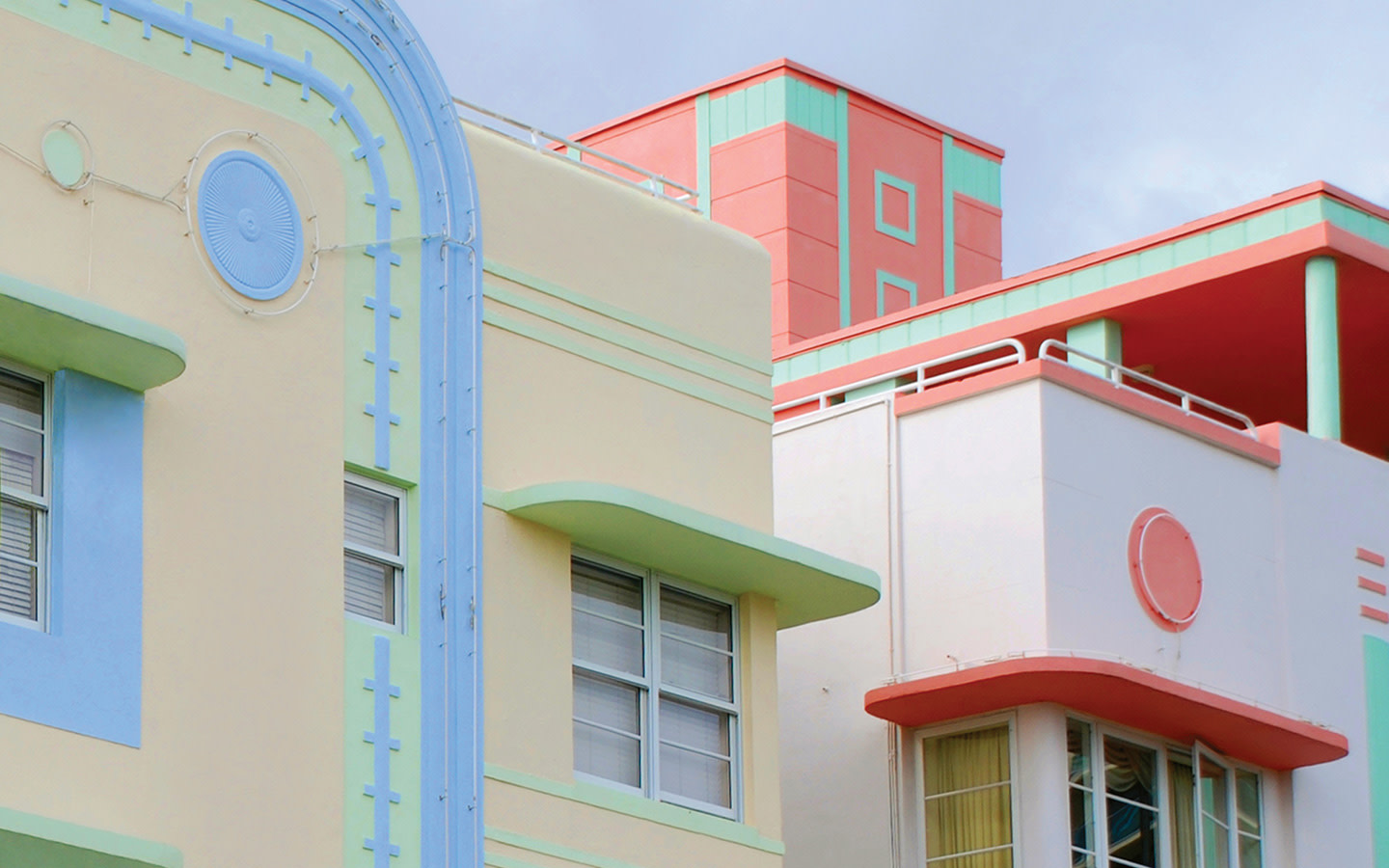
The Miami Beach Architectural District—better known as the Art Deco Historic District—is far more than a postcard-perfect strip of pastel buildings. It is a global design landmark and a case study in how climate-adapted materials, aesthetic innovation, and architectural resilience have come together to shape one of the most iconic built environments in the world.
Spanning roughly 5,750 acres and featuring nearly 960 historic structures, the district holds the largest concentration of Art Deco architecture in the world. But beyond its visual charm lies a rich dialogue between function and form, driven by local materials, tropical conditions, and Florida’s unique design evolution.
Florida’s Architectural Context: Form Follows Climate
To understand the Miami Beach district, we must understand Florida’s environmental demands:
As a result, Florida architecture evolved around:
The Miami Beach Architectural District exemplifies these strategies—delivered in a package of vibrant, modern design.
The Core Styles: Art Deco, Tropical Deco & MiMo
Art Deco (1925–1940s)
Imported from Europe and New York, this design language emphasized:
Tropical Deco (Miami’s Twist on Deco)
Miami’s version of Art Deco added:
Miami Modernism (MiMo, 1950s–60s)
Following WWII, MiMo introduced:
These styles blended performance with identity—a legacy modern builders in Florida still emulate.
Signature Materials: Design With a Purpose
The genius of Miami Beach’s historic architecture lies in material innovation, not just visual design. Each material choice met an aesthetic and environmental demand.
Stucco over Masonry Block
A dominant exterior finish, stucco over reinforced CMU (concrete masonry unit) became essential:
Stucco helped democratize Art Deco by reducing construction cost while enabling flamboyant façades.
Glass Block
Introduced in the 1930s, glass blocks became a Miami Beach staple:
These blocks allowed designers to deliver the “machine-age” glow of Deco with tropical practicality.
Terrazzo Flooring
More than decorative, terrazzo had staying power in Miami Beach:
Terrazzo became a motif canvas: starbursts, chevrons, and custom insignias appear across hotel floors and thresholds.
Neon & Chrome Accents
Designers used neon tubing and chrome detailing to echo movement, nightlife, and futurism:
While less sustainable today, they shaped Miami’s identity—and inspired many of today’s LED lighting systems and aluminum alternatives.
Concrete “Eyebrows” & Shade Features
One of Tropical Deco’s smartest inventions, the eyebrow:
This is a Florida-born innovation—still used in modern sustainable design through overhangs, louvers, and brise-soleil systems.
Architectural Innovation Through Material Constraint
Because Miami Beach grew rapidly during the Great Depression and post-1926 hurricane rebuild, its architects had to innovate under tight budgets. They used:
This birthed an accessible modernism—luxury without cost—that still influences affordable housing and hospitality design in Florida today.
What Modern Builders & Designers Can Learn
The Miami Beach district isn’t just a nostalgic time capsule. It’s a living playbook for modern construction in hot, coastal regions.
Material Efficiency: Stucco, terrazzo, glass block, and powder-coated metals remain cost-effective and climate-adapted.
Aesthetic Strategy: Pastel color palettes reduce solar gain and offer identity.
Functional Ornamentation: Design features (like “eyebrows” or breeze blocks) that do something are more sustainable long-term.
Local Design Language: Buildings that reflect their place (coast, sun, storms) endure longer in both style and structure.
Influential Architects Who Defined the Look
Henry Hohauser: Designed 300+ Deco buildings like the Colony Hotel, Essex House—known for symmetry and chrome.
Lawrence Murray Dixon: The Raleigh, Marlin, and Tiffany Hotels—championed “streamline” curves and terraces.
Norman Giller: Post-war MiMo master—his brise-soleil and modularity influenced Florida condo design.
Barbara Capitman: Not an architect, but a preservation hero. Founded the Miami Design Preservation League and helped save these buildings from demolition in the 1970s.
Their work continues to guide coastal development that is design-forward but built to last.
Conclusion: Miami Beach as a Design Case Study
The Miami Beach Architectural District is more than a tourist destination—it’s an essential case study in climate-driven design, material resilience, and architectural creativity. It’s a reminder that great buildings don’t just look good—they solve problems beautifully.
For architects, builders, material vendors, and developers in Florida and beyond, the district offers inspiration rooted in:
As climate resilience and local identity become more urgent in the built environment, the lessons from this district aren’t just historical—they’re the future.
Sources
Miami Beach Art Deco | City of Miami Beach
Miami Design Preservation League
Pastel Perfection: Inhabit by Corcoran
FT: Restoration of the Raleigh Hotel
















Stay in the loop with platform updates, success stories, and industry news.